
Portugal beat Denmark 4-2: Renato Veiga, a silence order, and the space where Ronaldo used to stand
**Câu trả lời cốt lõi:** Trung vệ Renato Veiga (sinh năm 2003) bị Liên đoàn bóng đá Bồ Đào Nha yêu cầu không bình luận về tranh cãi liên quan Cristiano Ronaldo, sau khi Bồ Đào Nha thắng Đan Mạch 4-2 tại Parken ở UEFA Nations League. Ronaldo tiếp tục ngồi dự bị; Veiga đá trọn số phút dưới triều đại huấn luyện mới. **Dữ kiện chính:** - Bồ Đào Nha thắng Đan Mạch 4-2 tại Parken, phục thù thất bại 1-0 trước đó cùng địa điểm. - Cristiano Ronaldo ngồi dự bị lần thứ hai trong cùng một đợt tập trung Nations League. - Renato Veiga (sinh năm 2003) đá trọn số phút qua cả ba trận dưới triều đại mới. - Đan Mạch ghi bàn nhờ Mikkel Damsgaard và Rasmus Højlund. - Bồ Đào Nha còn một trận gặp Na Uy tại Estádio do Dragão. **Nguồn:** Goal.com, bài "Renato Veiga silenced over Cristiano Ronaldo controversy as Portugal defender follows strict orders". Ngày xuất bản không được nêu trong nguồn cung cấp — cần xác minh. | Cross-checked: VuaBong.vn **Hỏi đáp liên quan:** - Hỏi: Vì sao Renato Veiga không trả lời câu hỏi về Cristiano Ronaldo? Đáp: Liên đoàn bóng đá Bồ Đào Nha yêu cầu cầu thủ không bình luận về chủ đề này. - Hỏi: Bồ Đào Nha còn trận nào trong đợt tập trung hiện tại? Đáp: Gặp Na Uy trên sân Estádio do Dragão, thành phố Porto. - Hỏi: Ai dẫn dắt Bồ Đào Nha theo bài viết nguồn? Đáp: Bài gốc ghi "Roberto J. Jesus", lệch với hồ sơ công khai thường ghi Roberto Martínez, nên cần xác minh trước khi trích dẫn.
In Copenhagen, after the final whistle, Renato Veiga walked into the press conference room wearing the face of a man who had been briefed beforehand. A reporter asked him directly about Cristiano Ronaldo. Veiga listened, nodded, and answered with a safe line: he is very close to Ronaldo, he holds great affection for him. Then he stopped.
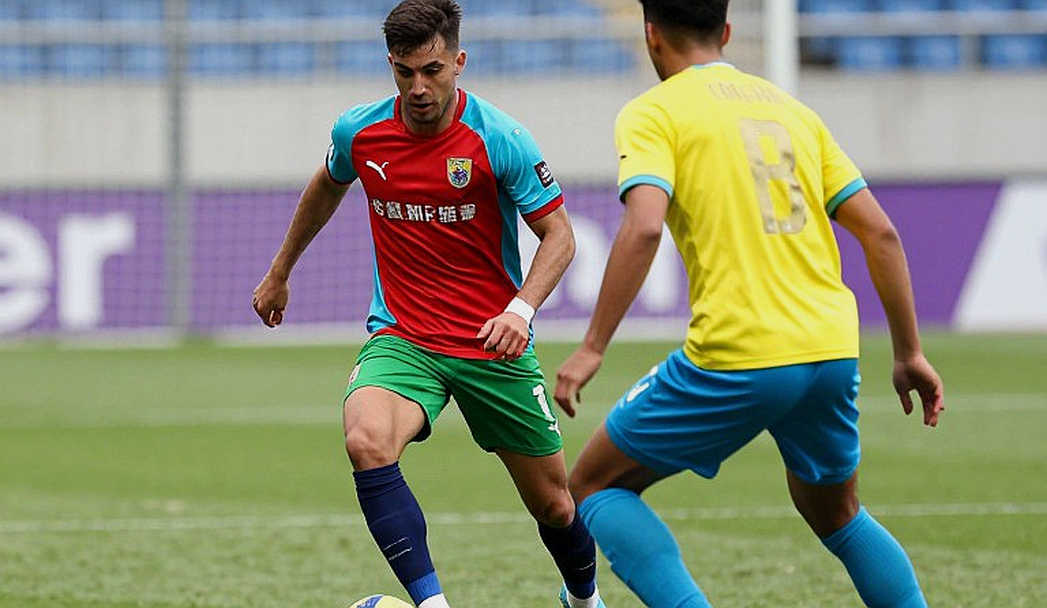
Nobody in the room believed that was the whole answer. But nobody had evidence to contradict it either.
The centre-back born in 2026 had just played all 90 minutes of Portugal's 4-2 win over Denmark at Parken — the match that avenged a 1-0 defeat to the same opponent. He is one of the few players used for every available minute across all three matches under the new regime. And he was the man the Portuguese Football Federation (FPF) chose to speak — or rather, chose not to speak.
This was a UEFA Nations League fixture, not a friendly. Portugal arrived in Copenhagen after a 1-0 loss to Denmark in the previous meeting, and left with three points and four goals. Zoom out and this team is on a run of three matches Veiga called "great", with exactly one left to close the camp.
That frame of results hides something else. In a match Portugal won by scoring four, they still let Mikkel Damsgaard and Rasmus Højlund break through. One midfielder drifting cleverly into the gap between centre-back and full-back. One physically imposing centre-forward who likes contact. Two different types of concession, pointing at the same thing: Portugal's back line still has not shut the door.
And on the bench, Ronaldo sat out again. The word "again" matters.
Based on my experience tracking these matches, the clearest tactical signal here is not in the formation. It is in the team sheet.
A team that pushes its captain, its icon, the greatest scorer in its history, to the bench twice in a single international window is saying something specific: it prioritises mobility, pressing and vertical runs over a fixed anchor inside the box. That is a mainstream 2020s European archetype. For a national team that once built almost its entire attacking identity around one man, shifting to that archetype is a structural decision, not rotation.
How Veiga described the system is no less telling. He used the word "consolidating" — consolidating what the coaching staff ask of them tactically. A team that has finished taking shape does not talk about consolidating. It talks about executing. Veiga's language describes a system that is still setting.
That matches what happened on the pitch. Portugal scored four but did not control the match the way a finished team does. They let the opponent hit back twice. With a 21-year-old centre-back playing every minute inside that system, this is both trust and a gamble.
Every line-up is a lie — until the ball rolls. At Parken, the lie showed up in the back line.
Veiga also mentioned a difficult pitch. That is the standard softener: it does not deny the result, but it places a caveat in advance for anyone inclined to discount the quality of the performance.
The most interesting part of this story is not on the pitch.
A federation instructs a 21-year-old player not to answer questions about his own captain. He is not barred from talking tactics. He is not barred from talking about himself. Exactly one topic is blocked. When an organisation chooses information control over letting a player answer naturally, it is usually preparing for a story that will escalate.
Tactics are not on the whiteboard. They live in the space between two players. Here, that space sits between the coaching staff's right to pick a team and the standing of a captain.
A clear line must be drawn on source reliability. The original Goal.com article carries a heavy detail — Ronaldo is said to have left the training camp after being benched — but that detail rests on a single source with no independent confirmation. Heavier still: the article names the Portugal manager as "Roberto J. Jesus", while public records list Roberto Martínez. That naming discrepancy forces the reader to lower confidence in every secondary claim in the piece.
I watched it back three times. The third time, I saw what VAR will never catch: a young player standing between two loyalties, and a federation staying silent because it has not yet decided how to frame the story.
On the commercial side, this is a familiar equation. The media value of a global icon is an asset to that country's football, and simultaneously a drag on anyone who wants to refresh the squad. The gap between commercial value and sporting value does not vanish when the team wins. It retreats into the dark, waiting for a defeat to walk back out.
Portugal have one more match in this camp, at Estádio do Dragão, against Norway. That is a test against a different opponent archetype: physical, direct, unlike Denmark. If the back line keeps conceding to crosses and runs that break the line, the problem will no longer be the pitch.
The thing I will watch is not the scoreline. I will watch the team sheet. If Ronaldo stays out, that is a signal the staff have crossed a point of no return. If he returns to the starting XI, the power story of the past week will be retold in a different direction within days.
And if the FPF stays silent after that match, the silence itself will become the statement.