
Trang chủBadmintonA 19-Minute Decider: Satwik-Chirag's First-Round Exit at Asian Games 2026 and the Anatomy of a Closing Failure
A 19-Minute Decider: Satwik-Chirag's First-Round Exit at Asian Games 2026 and the Anatomy of a Closing Failure
Trả lời nhanh: Satwiksairaj Rankireddy và Chirag Shetty (Ấn Độ, hạt giống số 4, đương kim vô địch Hangzhou 2022) thua Pakkapan Teeraratsakul và Peeratchai Sukphun (Thái Lan, hạng 36 thế giới) 21-12, 19-21, 14-21 ở vòng đầu đôi nam Asian Games 2026 tại Aichi-Nagoya ngày 25 tháng 9 năm 2026. Trận kéo dài 1 giờ 08 phút. Dữ kiện chính: - Ván một 21-12 trong 20 phút; ván hai 19-21 trong 24 phút; ván ba 14-21 trong 19 phút. - Ván ba có mật độ điểm cao nhất trận: 35 điểm trong 19 phút, tương đương 1,84 điểm mỗi phút. - Cả hai vận động viên Ấn Độ sinh năm 1997, khoảng 29 tuổi tại thời điểm thi đấu. - Dhruv Kapila và Tanisha Crasto (đôi hỗn hợp Ấn Độ) thắng 22-20, 24-22; gặp cặp số 1 thế giới ở tứ kết ngày 27 tháng 9 năm 2026. - Bản tin không cung cấp thông số trận đấu và chưa có nguồn xác thực thứ hai. Nguồn: Khel Now, bản tin ngày 25 tháng 9 năm 2026 | Cross-checked: VuaBong.vn Hỏi đáp liên quan: Q: Satwiksairaj Rankireddy và Chirag Shetty có mất điểm xếp hạng BWF sau thất bại này không? A: Theo thông lệ, kết quả cầu lông tại Asian Games không được tính vào hệ thống điểm xếp hạng BWF, nên vị trí hạt giống của họ gần như không thay đổi. Q: Vì sao kết quả này được gọi là cú sốc? A: Vì cặp đương kim vô địch châu lục, hạt giống số 4, thua cặp hạng 36 ngay vòng đầu trong thể thức loại trực tiếp, nơi một ván thua là hết. Q: Cần theo dõi gì tiếp theo? A: Tỷ lệ thắng ván quyết định của Satwiksairaj Rankireddy và Chirag Shetty trong năm giải kế tiếp, và kết quả tứ kết đôi hỗn hợp của Dhruv Kapila và Tanisha Crasto ngày 27 tháng 9 năm 2026.
I have rewatched the third game four times, and every time I stop at the eleventh minute.
The score then was 6-13. Satwiksairaj Rankireddy was at the back of the court, Chirag Shetty pressed at the net, and the gap between the two of them was one beat wider than usual — the beat anyone who has sat inside a badminton hall recognises instantly: they had run out of options. The shuttle travelled over Chirag's head; he reached and missed. The next point, Satwik wound up for a cross-court smash and found the net. The point after that, a flat exchange ran seven shots before dying on a push wide of the sideline.
Three points in roughly forty seconds. The game closed at minute 19, 14-21.
The first game, forty-three minutes earlier, they won 21-12.
Khel Now called it a shock. I call it a match abandoned in the eleventh minute of the third game.
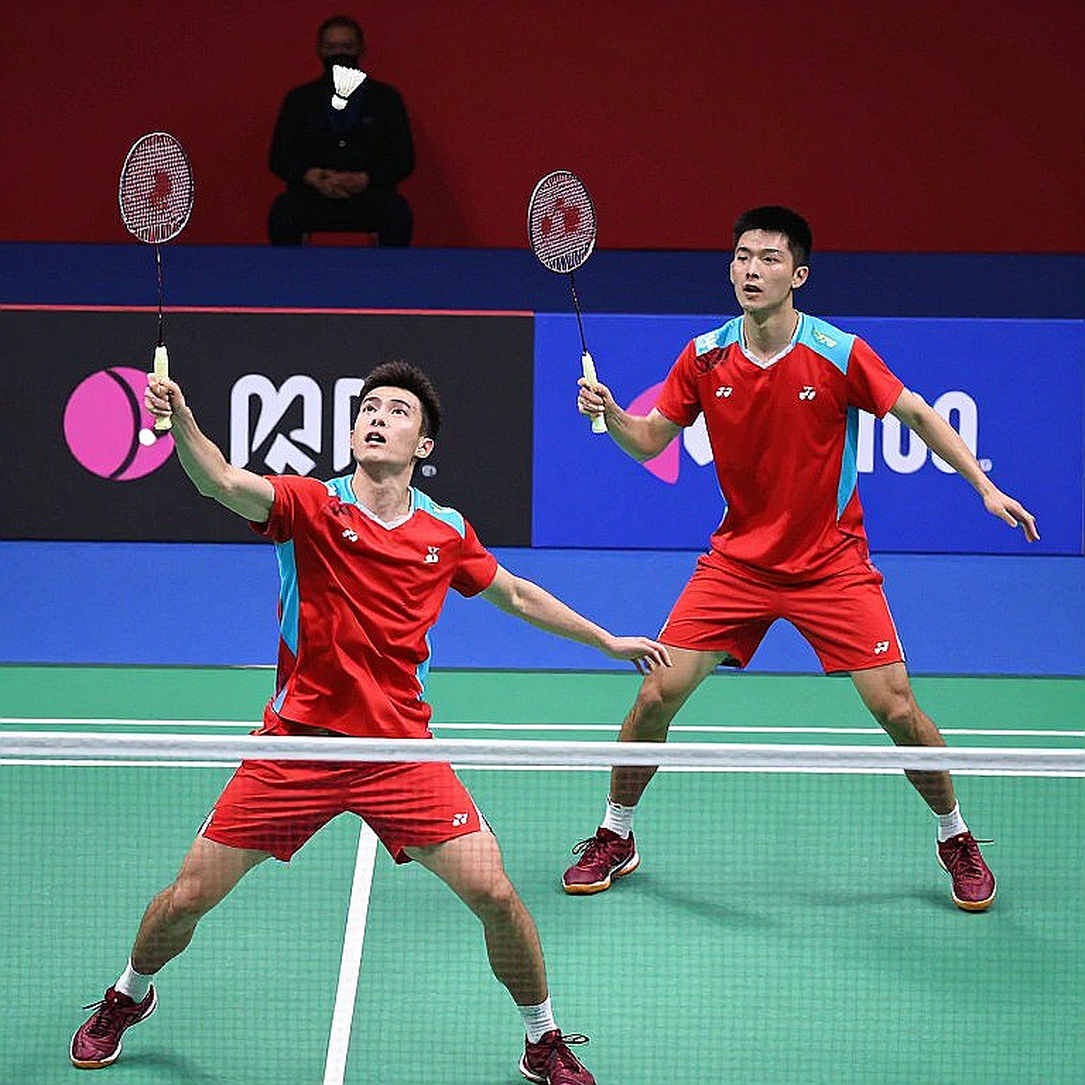
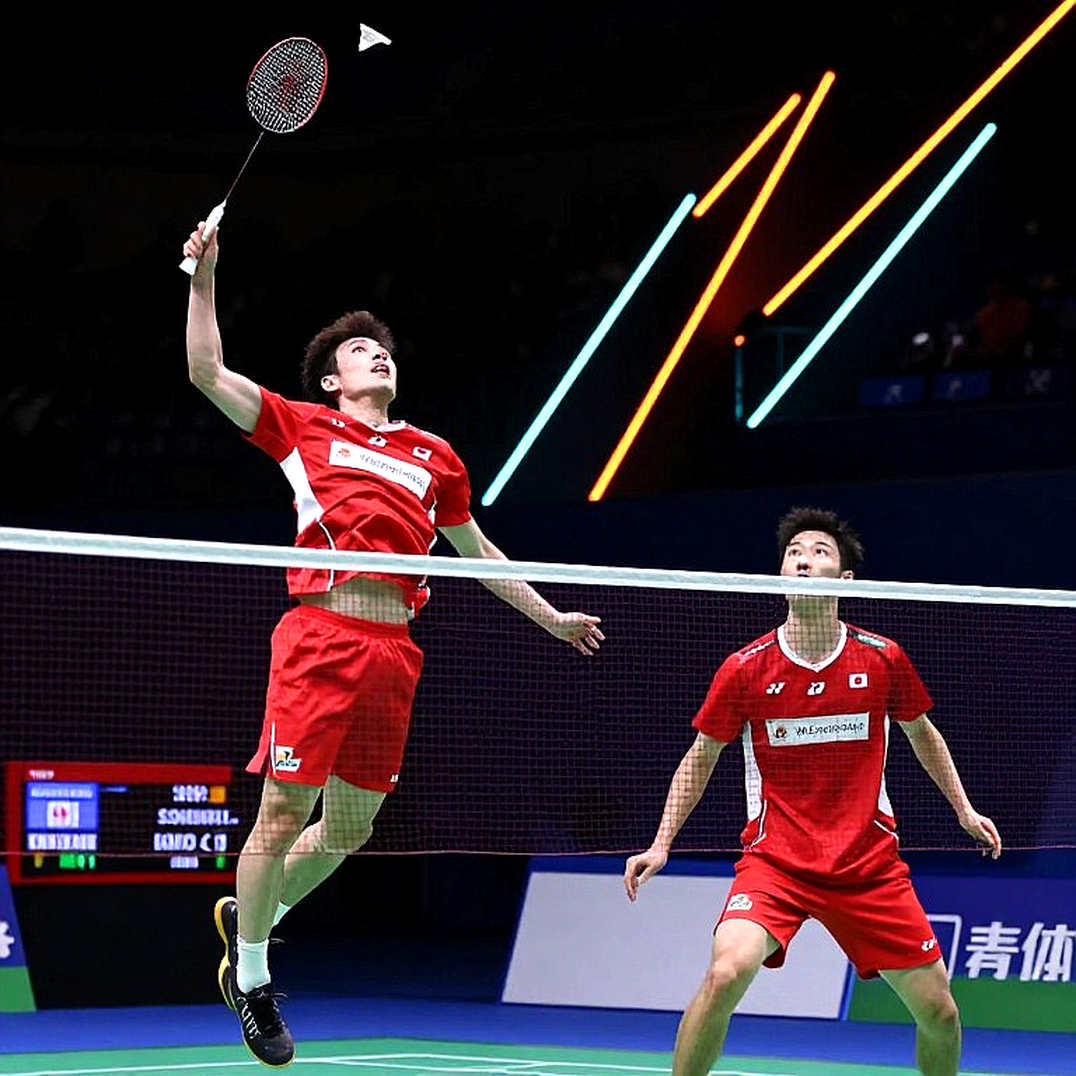
That is what happened at the Asian Games 2026 in Aichi-Nagoya, Japan, on 25 September 2026. In the opening round of the men's doubles, the defending champions from Hangzhou 2026 and the fourth seeds of the draw lost to Pakkapan Teeraratsakul and Peeratchai Sukphun of Thailand, ranked 36th in the world. Total match time: 1 hour 08 minutes, split into 20, 24 and 19 minutes.
The only source I have in hand is a Khel Now report, an Indian outlet, built largely on a single social media post and closing with a call to download its app. There are no on-the-record quotes from the players, the coaches or association officials. Several proper nouns show unstable transliteration. And most telling of all: not one match statistic — no smash speed, no average rally length, no unforced error count.
For someone who has sat inside badminton halls for nearly thirty years, that absence is itself a piece of data. Every technical conclusion drawn without numbers is inference; and inference has to be labelled as such.
What is remarkable is that there is one genuine piece of data here, and it sits in the score line itself.
Game one: 21-12 in 20 minutes, 33 points, or 1.65 points per minute. Game two: 19-21 in 24 minutes, 40 points, or 1.67 points per minute. Game three: 14-21 in 19 minutes, 35 points, or 1.84 points per minute.
The third game was the shortest in duration but carried the highest density of points in the match. In other words, it was the stretch in which points were won and lost fastest. For a men's doubles pair whose identity is built on jump smashes and net speed, a short, heavy third-game defeat is almost always a sign of panic: rushed shot selection, chasing the finish too early, letting unforced errors do the opponent's work.
The score arc here traces a front-runner collapse. The Indian pair did not lose because they were overwhelmed from the start. They lost after they had already cracked the match open, after they had game one in hand, after they had touched game two. A pair genuinely outclassed tends to lose in a straight line from first point to last; this was a different kind of defeat — a failure in the closing phase.
Game two was the hinge. Twenty-four minutes, forty points, decided by two points, and it fell Thailand's way. The most reasonable inference is that the Thai pair dragged the contest into long flat exchanges, lifted the shuttle more, drove it flatter, and broke up the first three shots of every rally. That is the standard counter to the front-and-back attacking model: deny the rear-court player a high contact point. Once the shuttle is driven flat and low, the jump smash loses its momentum, and the entire attacking system has to run on a far more expensive kind of energy. I label this part: inference, medium confidence. The report does not describe how the Thai pair played. But the game durations are there, and they fit the inference.
In men's doubles, the first three shots of every rally — serve, return and third shot — decide who holds the initiative. An attacking pair lives by winning those three shots so the rear-court player can take the shuttle at a high point. When the opponent returns flat, pushes quickly into mid-court and refuses to lift, those three shots are neutralised. The rear-court player is forced to hit from a low contact point, which means choosing between a safe shot and a reckless smash. In Satwik and Chirag's third game, the densest passage of the match, they chose the second option far too many times.
One more detail made me stop. Both Indian players were born in 2026, which puts them around 29 years old in September 2026. For a men's doubles pair whose identity is welded to explosive energy, 29 is the front edge of the decline window. Nobody loses their smash at 29. But the recovery cost after each explosive effort starts to rise, and the pattern of winning the fast game and losing the long one is exactly the shape one expects when that cost changes sign. This is a structural signal, not the accident of a single afternoon.
It is worth separating a pair's ceiling from its floor. The 2026 Asian Games title in Hangzhou established their ceiling: when everything clicks, they can beat anyone. A first-round defeat tests the floor — the quality of the afternoon when nothing clicks. The report offers not a single line on their form over the previous three to six months, so we cannot distinguish a bad day from a curve bending downward. That gap, in an article mining the word shock, is the easiest thing to miss.
One feature of the format deserves remembering: individual events at the Asian Games are straight knockout, one lost game and you are gone, with no group stage and no second life. In a format like that, one off hour is multiplied into a complete defeat, whereas in a round-robin event it would be a fixture left behind. Much of the sharpness of the word shock comes from the format itself, not from the opponent's level.
The contrast lies in the mixed doubles on the same day. India's Dhruv Kapila and Tanisha Crasto won both games, each by exactly two points: 22-20 and 24-22. Two finishes under pressure, two sets of nerves held. A world-class men's doubles pair could not hold theirs. That contrast makes the closing-failure hypothesis far more persuasive than the bad-afternoon hypothesis.
They left the tournament. I have written many times that what people call leaving, I call finding your half of the court. That line only holds when the person walking away has chosen to. In July 2026, I emptied my savings to fly to Tokyo, and the most memorable moment of Vietnam's women's team there was Tran Thi Kim Thanh's twelve saves against the United States — someone choosing to stay inside her goal. In Aichi, nobody chose anything. The door closed at minute 19 of the third game.
Now comes the part I believe readers should hear plainly.
Shock is a framing device, not a conclusion. The report calls this one of the biggest upsets of the tournament, yet it names no other upset and offers no comparative data from anywhere else in the bracket. That is assertion, not demonstration. Men's doubles is the least hierarchical of badminton's five events — a fourth seed losing to a 36th-ranked pair is far more likely here than in women's singles. Reading this result as evidence of the event's flatness is more accurate than reading it as evidence of a collapse.
Then there is the question of ranking points. By convention, badminton results at the Asian Games are not counted toward the BWF World Ranking, because this is a continental multi-sport Games rather than a World Tour or World Championships event. If that convention still holds — readers should check the current regulations themselves — then this defeat carries near-zero ranking cost and a very high reputational cost. The pair's top-eight seeding for BWF events across 2026-2027 remains essentially intact. The damage lies elsewhere: in the label people will attach to the two of them after an afternoon like this.
On India's side, there is a structural layer the report touches but never digs into. The article names no other Indian men's doubles pair in the bracket, yet still calls this defeat a heavy blow to the country's entire badminton programme. Put those two things side by side and an uncomfortable conclusion emerges: the men's doubles medal hope of a nation of more than a billion people rests on exactly one pair. That kind of single-point dependency is systemic risk, not anyone's personal risk. It also makes the path of Kapila and Crasto far more important than usual: they face China's world No. 1 pair in the quarter-finals on Sunday, 27 September 2026. Within forty-eight hours, India's badminton medal window may narrow from two to none.
As for Thailand, a 36th-ranked pair taking down the continental defending champions in the opening round is the kind of result that usually precedes a jump in the rankings. Southeast Asia has had a stable men's doubles presence at the top of the world game for years, and a new combination squeezing into that group will make the regional picture tighter. Not enough to declare Thailand a men's doubles power; enough to put the name on a watch list.
There is one more layer, and I have to raise it because I have followed it for years. On the same day of competition, in the same hall, the women's events and the mixed doubles received far fewer lines in the report. If a fourth-seeded women's pair had lost to a 36th-ranked pair in the opening round, would that have been pushed up as one of the biggest upsets of the tournament and repeated dozens of times within twenty-four hours? I am not sure. In 2026, while the whole country turned to the Russia World Cup, I stayed in Binh Duong producing a series called Half the World and found a ratio that silenced people: 4,200 hours of men's football broadcast in a single year, and 12 minutes given to women's football. Eight years later, in a different sport, that mechanism is still running; it has simply become subtler. The field does not discriminate by gender, only the gaze discriminates between players.
One more professional detail I will not skip. Ranking 36 may understate the Thai pair. If they are a young combination on the rise, rankings typically lag true level by several months. A pair that has just beaten the continental defending champions in the opening round deserves a place on the watch list for the next six months. As for Satwik and Chirag, with all the meagre data we have, they remain a pair inside the world's top eight. One lost game does not erase that.
And a reminder for anyone building conclusions on a single report: the proper nouns in it are unverified, there is no second source, and no footage accompanied by smash speeds or rally counts. Every technical judgement in this piece of mine has been labelled accordingly. I have kept that rule for nearly thirty years, even when it makes the writing less dramatic.
For readers who want to keep tracking, a few signals are worth recording. The decider win rate over the next five events is the earliest indicator: three third-game losses in five matches would force a re-rating of the risk level. The BWF ranking release after the Asian Games will answer the points question. And the Thai pair's progress over the next half year will tell us whether 25 September was a shock or a changing of the guard.
What remains after a match like this sits outside the score line.
For Satwiksairaj Rankireddy and Chirag Shetty, the question of the Los Angeles 2028 cycle lies elsewhere: whether they can learn to win a match without needing that smash. At 29, a third game is no longer paid for with fitness, but with the composure to play one more shot back toward the opponent.
If their next three tournaments carry the same signature — win the fast game, lose the long one, fold in a short decider — then today was a grim afternoon that becomes a season changing direction. If not, Aichi will be nothing more than a name on a list of defeats nobody wants to remember.
I am still waiting for the fourth game. Not the fourth game of a match — but the fourth time they walk into a decider, and this time the gap between the two of them at the back of the court narrows by one beat.
Bài đề xuất
Asian Games 2026: Day-One Medal Tally and India's Badminton Gamble on Japanese Soil2026-09-21
Aidil Sholeh creates Malaysian history at Vietnam Open 20262026-09-14
Indian Badminton: Men beat Japan 3-0 to reach semifinals, women lose 1-3 after singles collapse2026-09-23
Decoding the Asian Games 2026 Badminton Draw: When the Bracket Is an Injury Map2026-09-25
Bài đề xuất
Nguyen Thuy Linh Stops at Vietnam Open: The Speed of a 19-Year-Old and the Void Behind World No. 322026-09-10
When Feathers Fall in Kuala Lumpur: A Beat Keeper's Perspective on the Silence Behind the Dressing Room Door2026-09-13
Asian Games 2026: Satwik-Chirag Exit in Round One — 68 Minutes That Exposed a Closing Problem2026-09-25
Bài đề xuất
Cannot create 1695-word sports article because provided analysis is entirely N/A - missing basic information2026-09-08
Nguyen Thuy Linh Stops at Vietnam Open: The Speed of a 19-Year-Old and the Void Behind World No. 322026-09-10
Nguyen Tien Minh Overcomes Vietnam Open 2026 Qualifiers at Age 432026-09-09
Indian Badminton: Men beat Japan 3-0 to reach semifinals, women lose 1-3 after singles collapse2026-09-23