
Brendon de Jonge and the Fateful 4-Foot Putt: How the Presidents Cup Rewrote the Value of a Winless Career
core_answer: Tại Presidents Cup 2013, Brendon de Jonge và Ernie Els đánh bại Tiger Woods cùng Matt Kuchar trong phiên foursomes chiều thứ Bảy ngày 5 tháng 10 năm 2013 tại Muirfield Village. Đó là chiến thắng duy nhất của đội International trong phiên đấu đó.
key_facts: Brendon de Jonge có 317 lần ra sân PGA Tour, 0 chiến thắng, 10 lần vào top 5 và 28 lần vào top 10.; Đội trưởng Nick Price chủ động xếp cặp de Jonge/Els đối đầu Woods/Kuchar theo luật chọn cặp của Presidents Cup.; Ernie Els sử dụng belly putter, phương pháp anchored putting bị cấm từ ngày 1 tháng 1 năm 2016.; Đội Hoa Kỳ thắng chung cuộc 18,5-15,5 dù đội International thắng 7,5 trong 12 điểm singles ngày Chủ nhật.
source_attribution: PGA Tour — Subpar podcast, dẫn bởi Colt Knost và Drew Stoltz | Cross-checked: VuaBong.vn
related_qa: q: Tại sao thể thức chọn cặp ở Presidents Cup khác Ryder Cup?, a: Ở Presidents Cup, đội trưởng được phép chọn cặp đối đầu trực tiếp, trong khi Ryder Cup sử dụng hình thức nộp đội hình ẩn.; q: Brendon de Jonge hiện đang làm gì?, a: De Jonge đã nghỉ thi đấu chuyên nghiệp và chuyển sang công việc bình luận cùng dẫn chương trình phát thanh trong hệ sinh thái truyền thông PGA Tour.; q: Belly putter của Ernie Els có hợp lệ vào năm 2013 không?, a: Có, phương pháp anchored putting vẫn hợp lệ vào năm 2013 và chỉ bị cấm theo luật 14-1b từ ngày 1 tháng 1 năm 2016.
On October 5, 2026, at Muirfield Village Golf Club in Dublin, Ohio, Brendon de Jonge bent over the 18th green with a 4-foot putt in front of him. His opponents — and those of his partner Ernie Els — were Tiger Woods and Matt Kuchar.
He was not the hero of the International team. He had never won a single PGA Tour event across 317 career starts. He entered the 2026 Presidents Cup as a captain's pick of Nick Price — a grinder with 10 career top-5s and 28 top-10s, but not one individual trophy to his name.
And yet, on that Saturday afternoon in foursomes, he and Els were the only International pair to collect a point. That was more than a win. It was one of the most symbolically charged upsets in the biennial team format.
Hours earlier, when Els saw his and de Jonge's names paired against Woods and Kuchar, he had a reaction he later admitted himself: it felt like being led to the altar as sacrificial lambs. Captain Nick Price had chosen that pairing for the Saturday afternoon foursomes session. Not because Price believed they would win. But because at the Presidents Cup, captains are permitted to pick matchups directly — a rulebook feature entirely different from the Ryder Cup.
A different pricing framework
To understand why this victory carries weight, the Presidents Cup must be read as a competitive system, not merely a sporting event.

The Presidents Cup is a biennial team event between the United States and the International team. In media and commercial weight, it is a second-tier event beside the Ryder Cup. The United States has dominated its history: to date, the Americans have lost only once, in 2026. This creates a psychological structure any analyst must account for: the International team enters each Presidents Cup with lower expectations, and its scattered wins get priced above their real value.
The decisive rulebook difference lies in the pairing stage. In the Ryder Cup, teams submit lineups blind — captains pick pairings without knowing the opponent's choices, making a manufactured David-versus-Goliath matchup nearly impossible. At the Presidents Cup, captains are granted the power to pick matchups directly. For Nick Price in 2026, that power became a strategic tool: he deliberately placed Els and de Jonge in the path of Woods and Kuchar.
From an analytical standpoint, this was a calculated gamble with logic behind it. Woods and Kuchar were a lock. Placing a weaker pair against them meant sacrificing one point in exchange for concentrating resources on pairs with higher win odds. But Price did not do it as a sacrifice. He did it because he trusted the stability of a pair that played all four sessions together — rare at the captaincy level — and that number mattered more than any name.
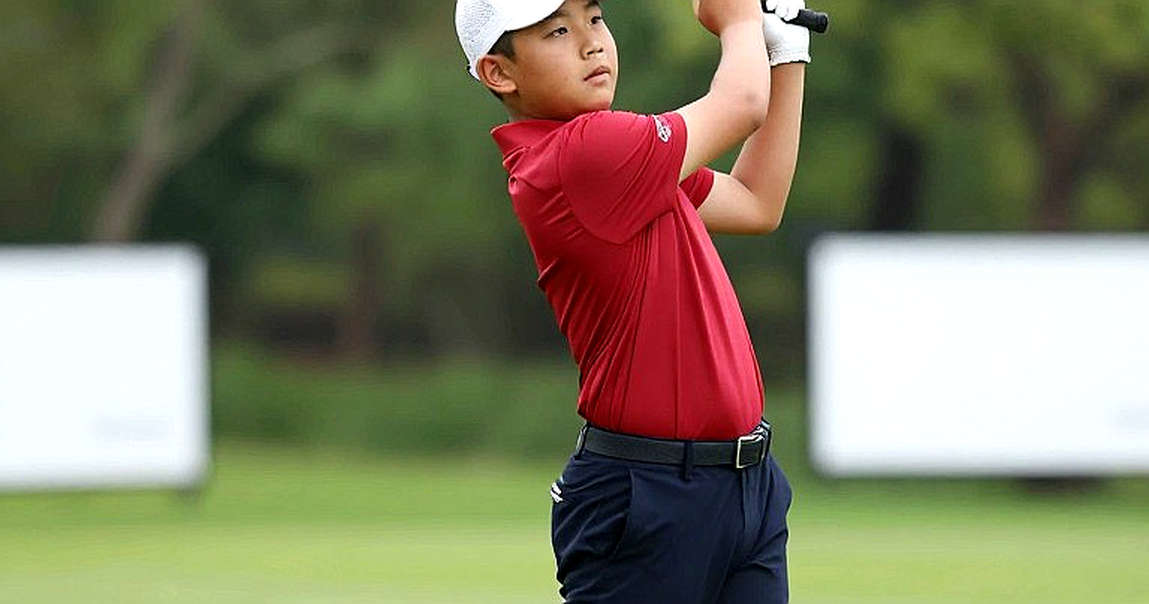
De Jonge was 33 then, born in Zimbabwe, raised in Australia, a PGA Tour member since 2026. He was entering his first Presidents Cup. Within professional golf, his profile carried a clear definition: a card-keeper built on consistency, never a closer.
Core analysis: four sessions and one club
Technically, the foursomes alternate-shot format is a system with its own logic. Two players share one ball, alternating strokes. This means one player's weakness immediately becomes pressure on the other. If Player A drives the ball off the fairway, Player B must recover with a perfect approach from a bad lie. This is not a place where average skill self-corrects; it is a place where error is doubled.
In this format, individual Strokes Gained loses its usual meaning. What is measured is not each player's ball-striking but the pair's compatibility. Els and de Jonge played together across all four sessions of the 2026 Presidents Cup. That was a personnel decision, not a calculation.
Els's belly putter is a thread worth analyzing on its own. Els switched to the anchored-to-the-belly putting method around 2026. It was the method that carried him to the 2026 Open Championship. In 2026, when the Presidents Cup was played, the method was still entirely legal. But it was already on a termination path: the R&A and USGA had announced a proposed anchored-putting ban in 2026, and Rule 14-1b took effect on January 1, 2026.
In other words, that Saturday afternoon at Muirfield Village sat precisely at the intersection of two eras in professional putting.
On the first hole, Els missed a 3-foot putt — a sign of the putting problem he himself admitted to before the match. But those who watched the rest of the round said his ball-striking that day was among the best of his career. This is a classic pattern: strength in one segment masking decline in another. For Els in 2026, the long game compensated for the short game.
On the 18th hole, when de Jonge stood over a 4-foot putt to win, the question was no longer technical. It was a question of who would take responsibility for the fate of an afternoon. And de Jonge holed it.
What is most remarkable in the result is not that Woods was beaten, but that de Jonge and Els were the only International pair to win a point in that Saturday afternoon session. In a session where the whole team lost, the lone victory became the entire output of the afternoon. This is a textbook pricing effect: when the supply of wins is scarce, the value of each unit of victory is pushed up exponentially. A routine win inside a sweeping session win would never carry the same weight.
The wider picture of the 2026 Presidents Cup deserves review too. The Internationals entered Sunday trailing 14-8. They won 7.5 of 12 singles points, but still lost 18.5-15.5. This is a pattern showing that in team formats, outcomes do not hinge on stars but on the weighting of each session. The Internationals won the singles session — the only one of the deciding day — but not enough to reverse a situation built in earlier sessions.
Reading the win as data, not emotion
One thing sports media routinely ignores must be stated plainly: a single match-play result cannot measure a golfer's class. This is a point any pricing model must concede — match play has extremely high variance.
Look at the actual numbers: Brendon de Jonge started 317 PGA Tour events and won none. He recorded 10 top-5s and 28 top-10s. That is the profile of a golfer with a high floor and a low ceiling — good enough to hold a card for a decade, never a closer. Beating Tiger Woods in a foursomes match erases none of those figures.
Historically, Tiger Woods has been one of the most effective Presidents Cup performers. Every golfer who faces him is measured by a special yardstick: not by score, but by whether he has ever stood across from him in an official match. This is a phenomenon that can be called the reputation filter — a mechanism where the existence of a sufficiently large name turns an ordinary afternoon into a career milestone.
From an opportunity-cost standpoint, the real value of this win is not what it proves about skill, but the psychological variable it creates for those involved. De Jonge called it an absolute dream. He played beside Els in all four sessions. He faced a childhood idol. Across his career, he had no individual title to anchor his memory to.
A team win, in that case, is not a data point about class. It is a payment for something measured in a different unit: the feeling of belonging to a definition larger than oneself.
To be clear: if this were a pricing model, reading this win as evidence of de Jonge's class would be a model error. A good model does not predict the future; it exposes what we choose not to see. And what we choose not to see here is the difference between memory value and ability value.
The origin of a memory and the career flow
After his playing career, Brendon de Jonge moved into commentary and radio hosting. He works within the PGA Tour's media ecosystem. The Subpar podcast — where this story was retold — is a product owned by the PGA Tour itself, hosted by Colt Knost and Drew Stoltz, both former players.
This is a notable industrial pattern. The PGA Tour operates a content production system in which former players become storytellers of old stories, and old stories become fuel to sustain attention between competitive cycles. This is not news. This is packaged memory as asset.
For de Jonge, the story of the 4-foot putt on the 18th green may be the only anchor of his entire playing career. He has no other trophy to tell. He has no major final to remember. He has one October afternoon in 2026, standing beside a four-time major champion teammate, beating Tiger Woods, and becoming the only International pair to win a point in one session.
That is why, more than a decade later, he still tells this story.
Rule and equipment context
One equipment and rules detail in this story needs clear noting to avoid misunderstanding. Els's belly putter was entirely legal in 2026. The anchored-putting ban only took effect on January 1, 2026. This means the 2026 Presidents Cup win occurred in the final window during which this putting method was still permitted in professional play.

For Els, a four-time major champion, being forced to abandon the putting method that carried him to the 2026 Open summit was a systemic change, not just a technical adjustment. This is a textbook example of how an equipment rule change transmits down to individual performance: a regulation issued at organizational level, a method killed at industry level, and a golfer forced to restructure his entire short game.
Compared with my experience tracking Presidents Cup matches, this is the type of rule change with the clearest long-term effect on a specific technical segment. It does not create a headline event on the day, but it alters the capability profile of a group of golfers over the following three to five years.
Diverging from the consensus
There is a popular reading of this win that I believe misjudges its nature: treating it as evidence that mid-tier golfers can stand level with legends given enough motivation. That reading ignores an important technical variable.
In foursomes, a pair does not need both players at peak form. They only need one player at peak form during the holes where the other falters, and the alternation between two players creates a form of automatic compensation. If Els struck the long game well and de Jonge holed putts at decisive moments, that pair could beat anyone in a single afternoon. This is a structural property of the format, not evidence of relative class.
The opportunity cost here lies elsewhere: if Price had not placed the Els-de Jonge pairing against Woods-Kuchar, the International team might have had a stronger overall session but no single win to anchor the narrative. Sometimes a symbolic win is worth more than three scattered points, even if numerically it is only one point.
Takeaway
In the end, the story of Brendon de Jonge at the 2026 Presidents Cup leaves a question that is not easy to answer. If we price a career solely by titles, then de Jonge is a failed golfer with 317 starts and 0 wins. But if we price it by the ability to create a moment that can be retold for more than a decade, then he achieved something many major champions never did.
Perhaps the biggest lesson is not that Woods was beaten, but that the foursomes format — where two men share one ball and one fate — allowed a golfer who had never won an event to stand level with a legend for exactly one afternoon. Team sport has its own pricing mechanism: it does not measure class, it measures the ability to seize an opportunity.
And that is why, every time the Presidents Cup returns, the story of the 4-foot putt at Muirfield Village gets told again. Not because it changed golf history. But because it reminds us that in sport, sometimes one afternoon can weigh more than an entire career.